
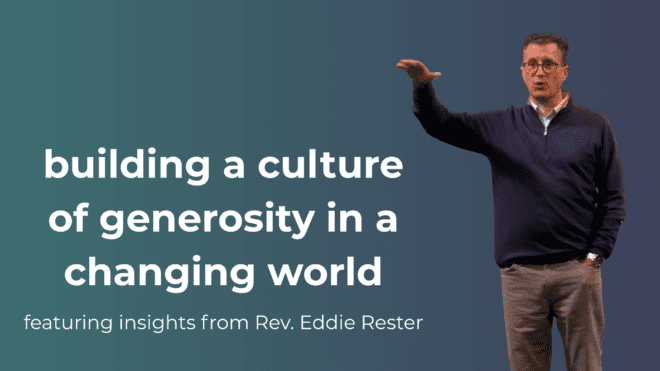
Recently, the Missouri United Methodist Foundation hosted a group of pastors and laity for a day of learning with Rev. Eddie Rester, Senior Pastor of Lover’s Lane United Methodist Church (Dallas, TX). With years of experience in stewardship, generosity, and donor development, Eddie offered practical wisdom and encouragement for churches seeking to build a culture of generosity in a changing world.
The day focused on two important topics: Understanding and Engaging Millennial and Gen-Z Givers and Cultivating Asks from a Donor. Throughout the training, participants were reminded that generosity is not simply about fundraising; it is about relationships, discipleship, and helping people connect their faith with God’s work in the world.
One of the clearest themes of the day was that younger generations approach giving differently than previous generations. Millennials and Gen-Z donors are deeply motivated by stories, relationships, and visible impact. They want to know how their gifts make a difference, and they expect churches and nonprofits to communicate clearly and consistently through digital channels.
Eddie shared that Millennials often research organizations before making a gift, paying close attention to testimonials, communication style, and social media presence. They are willing to give immediately when inspired, but they also want reassurance that their contribution mattered. Gen-Z donors similarly value transparency and impact, often reviewing an organization’s social media, online presence, and community reputation before deciding to support it. Both generations are highly responsive to authentic storytelling, peer-to-peer campaigns, and opportunities to engage on their own terms.
For churches hoping to connect with these younger generations, Eddie encouraged leaders to reflect on several important questions:
· Are we primarily communicating information or stories?
· Are we creating opportunities for younger adults to volunteer and give in meaningful ways?
· When was the last time we truly listened and acted on what we heard?
· Are we nimble enough to respond to immediate community needs?
· Who in our community can we partner with that is already doing impactful work?
The second half of the day focused on donor conversations and cultivating generosity through relationships. Eddie challenged pastors to stop viewing donors as “resources to be accessed” and instead see them as “souls to be shepherded.” That simple shift reframes generosity as part of discipleship rather than merely another fundraising strategy.
Participants explored how generosity conversations can support stewardship campaigns, capital campaigns, special ministry needs, and planned or legacy giving. Through role-playing exercises and discussion, pastors practiced making compelling asks, handling rejection gracefully, and inviting others into a shared vision for ministry.
Again and again, Eddie emphasized that meaningful donor development happens slowly and relationally. He encouraged pastors to invest time in genuinely knowing their people—their stories, passions, fears, and understanding of money and faith. Over time, those relationships create opportunities to connect a giver’s heart with a compelling vision of ministry where they can see themselves becoming part of God’s ongoing story through the church.
Perhaps the most important takeaway from the day was this: generosity grows where relationships are nurtured. In a world filled with competing voices and causes, churches have a unique opportunity to invite people not simply to give money, but to participate in transformed lives and transformed communities. When churches listen well, tell meaningful stories, cultivate authentic relationships, and clearly share God’s vision for ministry, generosity becomes more than a transaction; it becomes an act of discipleship and hope.