
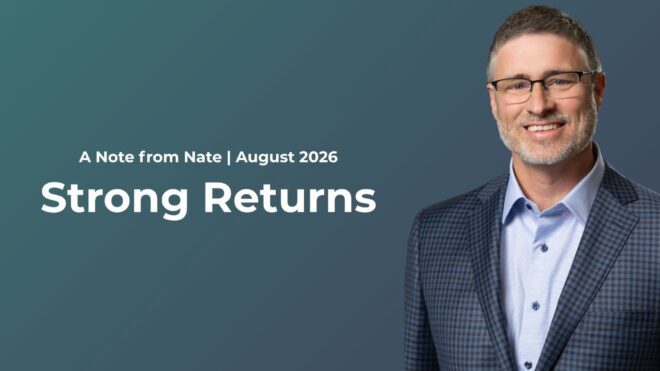
Few people have influenced my life more than my mother’s mother. I called her “Nanny.” She lived in what was then small-town Georgia. She and my grandfather, Papa Mac (his last name was McDaniel), had no education beyond the 10th grade. He worked as a “runner” for a rock quarry in suburban Atlanta, driving to pick up equipment whenever it was needed. She worked in a nearby shoe factory, which we called the “shoe shop,” installing brass grommets in men’s work boots. They spent their working lives in hot, sweaty, smelly, and dusty conditions until they retired in their late 60s. Their wages were those of Southern, non-union, blue-collar workers. Yet after they had both gone on to their greater reward, I had to explain to my mother, their only child, that she was now a millionaire and needed financial and tax advice. Educated with a Master’s degree, she looked at me skeptically. But by then I was an attorney, and I knew how to read a will, bank statements, and real estate appraisals.
Nanny, even more than Papa Mac, knew how to stretch and save a dollar. Without formal education, they both understood the power of compound interest. They were not stock market investors, and today they could not have done what they did in the 1980s and 1990s. But they budgeted carefully, saved what was left each month, and invested in CD’s and interest-bearing accounts when interest rates were high. They also bought real estate in a small town that, by the time my grandfather died in 2010, sat in one of metro Atlanta’s fastest-growing areas.
Let’s be honest: Jesus was far more interested in how much people loved than in how much wealth they accumulated. The earliest Christians very likely embraced intentional poverty. It is difficult to read Scripture and find support for building wealth for its own sake. In the Gospels and Paul’s letters, we are more likely to find encouragement to give what we have to those who need it more.
Yet Scripture does not encourage us to waste the gifts or lives we have. In Ephesians, after calling the community toward unity in Christ and a new way of living, Paul writes, “Be careful then how you live, not as unwise people but as wise, making the most of the time.” I think Paul was reminding us that we are given only so much and called to significant ministries of love. We are to seek the most return for all we invest into our lives and ministries.
Here is the other thing to know about Nanny and Papa Mac: they ended their lives with plenty of wealth, while also giving away more than anyone I have known before or since. They were generous to a fault; and that is not much of a fault.
This is what the Foundation seeks to do well. We invest local church assets so they can generate strong returns. Then, when a church needs those resources for the work or generosity God is calling it to do, whether a building renovation, ministry experiment, or emerging opportunity, the assets are there to support it. We also hold permanent funds that are restricted for particular churches or ministries. Some churches receive more than $100,000 each year from such endowments because a donor looked to the future and entrusted that legacy gift to the Foundation.
When I say the Foundation is committed to “strong returns,” this is what I mean. We seek to build resources that can become stronger ministries. If your church would like to invest assets or establish a legacy gift for a church or ministry, please reach out to our staff. Our funds have experienced annual returns ranging from 5.2% to 8.5%, depending on risk tolerance. While past performance is no guarantor of future returns, this has been far better than what my grandparents could have earned in CDs or interest-bearing bank accounts today.
I am proud to serve as President and CEO of the Missouri United Methodist Foundation. We will keep looking for ways to benefit ministry across Missouri. And in all we do, you have my word: we will seek generous relationships, deep impact, and strong returns.